Top 20 Bespoke Automotive Restoration 2026

Review categories
- Bespoke Automotive Restoration
- Ultra-Luxury Residential Developers
- Independent Luxury Watchmakers
- Luxury Yacht Builders
- Independent Luxury Heritage Hotels
- Ultra-Luxury Interior Design Studios
- Private Art Advisory Firms
- High Jewelry Houses
Contact: [email protected]
First Published
Last updated
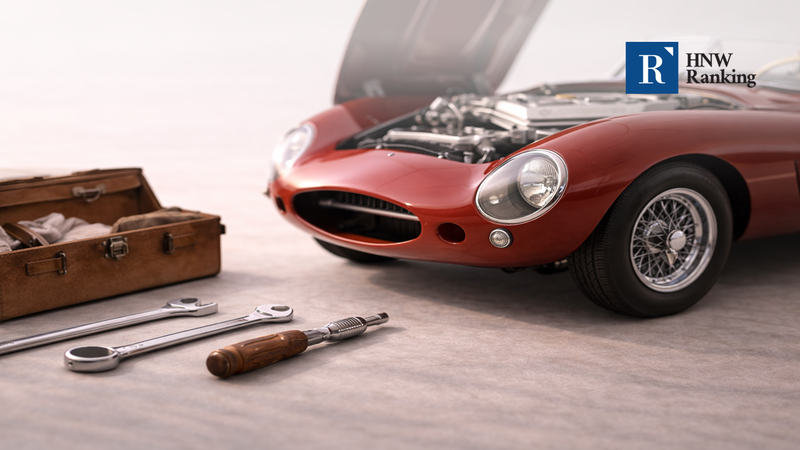
This article is part of the HNW Ranking Luxury & Heritage Rankings Series published by Ranking News. The ranking evaluates specialist firms serving ultra-high-net-worth collectors, family offices, automotive collectors, heritage vehicle enthusiasts, and private clients commissioning historically significant restoration, restomod, continuation, and bespoke automotive engineering projects.
Bespoke automotive restoration has become an established segment within the global luxury collectibles ecosystem. As classic automobiles increasingly function as cultural artifacts, emotional assets, and alternative investment holdings, collectors continue to commission restoration projects that combine historical authenticity, mechanical refinement, design sensitivity, and modern usability.
Bespoke restoration houses typically deliver services including concours-level restorations, historically faithful rebuilds, restomod engineering programs, continuation-style vehicles, and highly individualized commissions that reinterpret significant automobiles through contemporary materials, advanced mechanical systems, and artisanal craftsmanship. These projects are often commissioned by collectors seeking vehicles that preserve historic design identity while offering enhanced reliability, drivability, safety, and personalization.
Over the past decade, the restoration and restomod sector has matured into a specialized industry operating at the intersection of heritage preservation, boutique manufacturing, performance engineering, and luxury personalization. Firms capable of delivering both historical fidelity and modern engineering sophistication have therefore become influential participants within the collector car market.
This ranking identifies bespoke automotive restoration firms that demonstrate sustained engineering capability, collector credibility, craftsmanship standards, operational visibility, and relevance within the global heritage vehicle and luxury automotive ecosystem.
Market Overview
The bespoke automotive restoration sector continues to grow alongside the expanding global market for collector vehicles. Increasing numbers of high-net-worth collectors now commission restoration and restomod projects designed to transform historically significant automobiles into bespoke driving machines tailored to individual preferences.
Traditional restoration workshops historically focused on returning vehicles to factory-original specifications. However, modern restoration houses increasingly offer carefully engineered reinterpretations that integrate improved suspension systems, upgraded braking technology, lightweight materials, modern cooling systems, bespoke interiors, revised powertrains, and more refined long-distance usability.
Many restoration firms now operate as boutique manufacturers producing extremely limited-production vehicles. Their projects frequently involve highly individualized builds that combine heritage aesthetics with contemporary engineering, while retaining enough of the original vehicle’s identity to remain emotionally and culturally meaningful to collectors.
The collector car ecosystem is also becoming more international. Firms based in the United States, United Kingdom, Germany, Italy, and other specialist markets increasingly serve clients across North America, Europe, Asia, and the Middle East. As a result, restoration houses with global visibility, strong logistics capability, and demonstrated technical credibility have become more important.
As collector car markets continue to internationalize, restoration houses capable of delivering craftsmanship, technical innovation, provenance awareness, and long-term aftercare remain central to the luxury heritage automotive ecosystem.
Industry Trend — 2026
In 2026, several structural trends continue shaping the bespoke automotive restoration industry.
First, Porsche-based restomod programs remain dominant within the premium restoration segment, reflecting sustained demand for air-cooled Porsche heritage vehicles. Several restoration houses continue to focus on lightweight engineering, carbon fiber construction, bespoke chassis upgrades, naturally aspirated engines, and carefully calibrated analog driving experiences.
Second, Italian heritage reinterpretations have gained increasing visibility among collectors. Boutique firms specializing in Alfa Romeo, Ferrari, Lancia, and historic Italian rally or grand touring platforms have benefited from growing demand for handcrafted production, motorsport heritage, and limited-run performance vehicles.
Third, marque-specific restoration houses continue to matter. Collectors often prefer firms with deep specialization in one platform, such as Jaguar E-Type, Porsche 356, Ferrari classics, Mercedes-Benz heritage vehicles, Alfa Romeo 105-series cars, Land Rover Defenders, or historic rally Porsches. This specialization allows firms to develop exceptional technical depth and parts knowledge.
Fourth, electrified reinterpretations of classic vehicles remain a niche but visible segment. Although still smaller than traditional petrol-powered restomod programs, electric conversions have attracted collectors interested in alternative approaches to preserving historic vehicle design while adapting to modern urban and environmental preferences.
Finally, the market has become more selective. Collectors increasingly distinguish between firms with genuine engineering depth and firms relying only on visual customization. In this environment, restoration houses with proven craftsmanship, transparent build processes, specialist knowledge, and ongoing client support are expected to maintain stronger positions.
Methodology — Core Eligibility Criteria
To ensure consistency within the Bespoke Automotive Restoration category, firms included in the ranking were evaluated based on the following criteria:
- Provides restoration, restomod engineering, continuation, or bespoke reinterpretation services for classic automobiles
- Demonstrates specialized expertise in heritage vehicle restoration, marque-specific engineering, or historic automotive craftsmanship
- Produces bespoke, limited-production, or highly individualized restoration programs
- Serves collectors, family offices, heritage automotive institutions, luxury clients, or specialist enthusiast communities
- Maintains visible operational presence, active project output, and current market relevance
- Demonstrates recognized reputation within the classic car, concours, restoration, restomod, or collector vehicle community
Large automotive manufacturers, mass-market restoration networks, inactive firms, firms with uncertain operational continuity, and companies whose primary identity is new-car manufacturing rather than restoration or reinterpretation were excluded from the ranking.
Methodology — Ranking Factors
Institutions were evaluated based on qualitative and structural considerations including:
- Reputation among collectors and automotive heritage institutions
- Engineering capability and restoration craftsmanship
- Heritage authenticity and historical expertise
- Quality of marque-specific specialization
- Innovation in restomod, continuation, or bespoke reinterpretation programs
- Visibility within the collector, concours, rally, and luxury automotive ecosystem
- Ability to serve ultra-high-net-worth clients through individualized commissions
- Operational traceability, current market activity, and long-term client support
- Balance between ranking authority and commercial plausibility for specialist recognition
The Ranking News Top Bespoke Automotive Restoration Firms 2026 ranking reviewed approximately 60 restoration houses and specialist automotive engineering firms, from which 20 firms were selected.
Tier classifications reflect relative institutional positioning within the bespoke automotive restoration sector and do not represent technical performance rankings, investment recommendations, or endorsements of individual vehicles.
Tier I — Leading Bespoke Automotive Restoration Firms
Singer Vehicle Design
- Headquarters: Los Angeles, United States
- Founded: 2009
Singer Vehicle Design remains one of the defining names in the modern restomod and bespoke restoration movement. The company is closely associated with reimagined air-cooled Porsche 911 commissions, particularly those based on the 964-generation platform, and has established a global reputation for craftsmanship, engineering discipline, design coherence, and obsessive attention to detail.
Singer’s projects typically involve complete restoration and reengineering programs tailored to individual clients. Each commission combines classic Porsche design language with modern mechanical systems, carefully selected materials, bespoke interiors, and highly refined performance engineering. The result is not simply a restored classic car, but a deeply considered reinterpretation of a historically important platform.
The firm’s influence extends beyond Porsche enthusiasts. Singer helped define the modern luxury restomod category by demonstrating that restoration could become a serious design and engineering discipline comparable to boutique watchmaking, yacht customization, and high-end collectible manufacturing.
Singer Vehicle Design fits Tier I because it is the benchmark against which many modern restomod firms are measured. Its inclusion is essential for category authority and collector recognition.
Eagle E-Types
- Headquarters: East Sussex, United Kingdom
- Founded: 1984
Eagle E-Types is one of the most respected specialists in Jaguar E-Type restoration and reinterpretation. The company has built its reputation around a single iconic platform, delivering original restorations, “zero miles” Eagle E-Type restorations, and special edition models including the Eagle Speedster, Low Drag GT, Spyder GT, and Lightweight GT.
The firm’s work is highly relevant to collectors who value historically faithful design combined with improved drivability, mechanical refinement, and hand-built execution. Eagle’s approach preserves the emotional identity of the Jaguar E-Type while addressing many of the usability and reliability limitations associated with classic vehicles.
Eagle’s specialization gives it unusual authority. Rather than operating as a broad restoration workshop, the firm has developed deep expertise around one of the most culturally significant British sports cars ever produced. This focus allows it to maintain consistency in craftsmanship, engineering judgment, and brand identity.
Eagle E-Types fits Tier I because it remains one of the clearest examples of marque-specific restoration excellence. Its presence strengthens the ranking’s heritage authenticity and concours-level credibility.
Alfaholics
- Headquarters: Clevedon / Bristol, United Kingdom
- Founded: 1999
Alfaholics is a highly regarded specialist in classic Alfa Romeo restoration, engineering, performance upgrades, and bespoke restomod programs. The firm is especially known for its GTA-R program, which reinterprets the Alfa Romeo 105-series platform through lightweight construction, modern suspension development, upgraded powertrains, and carefully engineered performance refinement.
The firm’s projects appeal to collectors who value Italian design, analog driving character, motorsport heritage, and focused engineering. Alfaholics has built a strong reputation by combining parts development, race experience, restoration knowledge, and complete bespoke builds within a single specialist platform.
Its work is particularly important because it demonstrates that the restomod market is not limited to Porsche-based commissions. Classic Alfa Romeo platforms have a distinctive collector audience, and Alfaholics has helped elevate them into the premium bespoke restoration conversation.
Alfaholics fits Tier I because it is one of the strongest Alfa Romeo-focused restoration and restomod houses globally. Its inclusion broadens the ranking beyond Porsche and Jaguar while maintaining strong collector credibility.
Canepa
- Headquarters: Scotts Valley, United States
- Founded: 1980
Canepa is a major American restoration, motorsport, and collector car institution with deep expertise in historic race cars, Porsche 959 upgrades, concours-quality restorations, and rare performance vehicles. The firm operates from a large specialist facility in California and is known for restoration, preservation, service, collector vehicle sales, and motorsport preparation.
Canepa’s work is especially relevant for collectors whose vehicles have major historical, motorsport, or investment significance. The firm’s projects often involve complex mechanical restoration, authenticity research, race preparation, and preservation of important competition cars and rare road vehicles.
Unlike younger restomod brands built around a single reinterpretation program, Canepa occupies a broader collector-car role. It supports restoration, sales, maintenance, motorsport operations, and long-term stewardship for significant automobiles. This makes it particularly relevant to serious collectors and family offices managing heritage vehicle collections.
Canepa fits Tier I because it combines restoration depth, collector-market credibility, and motorsport expertise. Its inclusion gives the ranking institutional seriousness beyond the modern restomod segment.
GTO Engineering
- Headquarters: Reading / Berkshire, United Kingdom
- Founded: Early 1980s
GTO Engineering is one of the most respected Ferrari specialists in the restoration, servicing, repair, engine building, parts, event support, and acquisition market. The firm has developed deep expertise in classic Ferrari models and is especially relevant for collectors seeking technically accurate work on historically significant Italian performance cars.
The firm’s restoration programs emphasize mechanical correctness, craftsmanship, and deep knowledge of Ferrari heritage. Its work often involves rare components, complex engines, historically sensitive rebuilds, and long-term support for collectors who use, show, or maintain valuable Ferrari vehicles.
GTO Engineering also occupies an important position between restoration house and specialist heritage engineering firm. Its work is not simply cosmetic; it requires deep mechanical understanding, supply-chain access to rare parts, and the ability to support vehicles whose values and histories require exceptional care.
GTO Engineering fits Tier I because Ferrari restoration represents one of the most important segments of the collector car market. The firm’s marque-specific authority makes it a necessary leading inclusion.
Tier II — Established Bespoke Automotive Restoration Firms
Bespoke automotive restoration firms in Tier II represent institutions that have achieved meaningful recognition within the collector car ecosystem. While these companies may operate at smaller production scales than the most globally recognized restoration houses, their engineering capabilities and craftsmanship standards remain widely respected among collectors.
Many of these firms specialize in particular automotive marques or restoration philosophies, including historic racing vehicles, classic Ferrari restoration, luxury off-road reinterpretations, and heritage Italian performance engineering.
(Alphabetical order)
Emory Motorsports
- Headquarters: McMinnville, United States
- Founded: 1996
Emory Motorsports is one of the most recognizable names in Porsche 356 restoration and “Outlaw” customization. The firm is closely associated with Rod Emory’s family heritage in custom automotive craftsmanship and has built a strong following among collectors seeking bespoke reinterpretations of early Porsche models.
The firm’s work typically begins with original Porsche 356 platforms and combines steel-body restoration, subtle body modifications, improved drivability, bespoke interiors, and performance-focused mechanical upgrades. Its builds preserve much of the visual and emotional identity of the original 356 while creating a more individualized driving experience.
Emory’s strength lies in its narrow specialization and distinctive design language. The company has helped define the Porsche 356 Outlaw movement and remains highly relevant among collectors who prefer early Porsche heritage over later 911-based restomod programs.
Emory Motorsports fits Tier II because it is highly respected and category-specific. It is narrower than the Tier I firms, but its cultural influence within Porsche restoration is substantial.
Gunther Werks
- Headquarters: Huntington Beach, United States
- Founded: 2017
Gunther Werks specializes in high-performance reinterpretations of the Porsche 993 platform. The company’s projects are built around carbon-fiber construction, wide-body design, naturally aspirated and turbocharged powertrains, bespoke interiors, and limited-production engineering programs designed for collectors seeking an extreme expression of the final air-cooled 911 generation.
The firm is particularly relevant within the modern Porsche restomod segment because it approaches the 993 as an analog performance platform rather than merely a cosmetic restoration subject. Its builds often emphasize chassis precision, power-to-weight ratio, motorsport-inspired components, and individualized specification.
Gunther Werks has gained visibility among collectors who want a more aggressive and performance-oriented alternative to classic restoration. Its projects are usually highly limited, technically ambitious, and positioned clearly within the luxury restomod market.
Gunther Werks fits Tier II because it is one of the most visible Porsche-based restoration and reinterpretation houses. It is younger than Singer and more narrowly performance-focused, but it remains highly relevant.
ICON 4x4
- Headquarters: Los Angeles, United States
- Founded: 2006
ICON 4x4 is a major American restomod and bespoke vehicle builder known for reinterpreting classic utility vehicles, especially the Toyota Land Cruiser FJ, Ford Bronco, and other heritage off-road platforms. The firm combines rugged mechanical engineering with modern performance, bespoke interiors, and distinctive design refinement.
ICON’s work is important because it expands the bespoke restoration category beyond European sports cars. Many high-net-worth collectors now commission luxury off-road restorations and utility-vehicle reinterpretations, reflecting growing interest in classic 4x4s as collectible lifestyle assets.
The firm’s projects typically retain the visual identity of historic utility vehicles while incorporating modern drivetrains, improved chassis systems, refined interiors, and extensive customization. This approach makes classic off-road vehicles more usable without abandoning their heritage character.
ICON 4x4 fits Tier II because it is one of the defining names in luxury off-road restomod work. Its inclusion improves category diversity and reflects collector demand beyond sports car platforms.
Kimera Automobili
- Headquarters: Cuneo, Italy
- Founded: 2018
Kimera Automobili has become one of the most visible Italian restomod specialists through its reinterpretations of Lancia rally heritage, especially the EVO37 program. The firm’s work draws on Group B-era design, Italian motorsport memory, and modern performance engineering to produce limited-production vehicles with strong collector appeal.
Kimera’s projects are not conventional restorations. They are modern reinterpretations of historically significant rally cars, combining nostalgic design cues with contemporary materials, updated powertrains, and modern manufacturing techniques. This places the company within the high-end restomod and continuation-style ecosystem.
The firm is especially relevant because Italian rally heritage has become an increasingly important niche within the luxury collector market. Collectors seeking alternatives to Porsche and Ferrari restomods may find Kimera’s Lancia-inspired identity highly distinctive.
Kimera Automobili fits Tier II because it is young but highly visible, technically ambitious, and clearly aligned with the bespoke heritage performance market.
Mechatronik
- Headquarters: Pleidelsheim, Germany
- Founded: 1997
Mechatronik is a German specialist focused on classic Mercedes-Benz restoration, modernization, sales, and engineering. The firm is especially known for combining traditional Mercedes-Benz restoration knowledge with modern drivetrain, comfort, and usability upgrades through its New-Tech Series and related programs.
Mechatronik’s work appeals to collectors seeking historically significant Mercedes-Benz vehicles that can be used more confidently in contemporary driving conditions. Its projects often preserve classic Mercedes design while adding refined mechanical upgrades, improved reliability, and modern comfort systems.
The firm occupies an important niche because Mercedes-Benz heritage restoration differs from the Porsche and Italian sports car markets. It often involves grand touring usability, luxury refinement, engineering durability, and discreet enhancement rather than aggressive performance reinterpretation.
Mechatronik fits Tier II because it provides strong German marque diversity and deep Mercedes-Benz restoration expertise. It is an established specialist with clear category relevance.
Theon Design
- Headquarters: Oxfordshire, United Kingdom
- Founded: 2016
Theon Design is a British restoration and restomod firm specializing in bespoke commissions based on the Porsche 911 964 platform. The company combines digital design, 3D modeling, traditional craftsmanship, lightweight materials, and carefully optimized mechanical systems to deliver highly individualized air-cooled 911 builds.
The firm’s projects emphasize subtle design refinement, precise engineering, and client-specific specification. Theon’s approach is often described as OEM-like in quality aspiration, with attention paid to panel fit, weight reduction, suspension setup, powertrain calibration, and interior detailing.
Theon Design has gained increasing international visibility as collectors continue to seek alternatives within the Porsche restomod segment. Its low production volume and bespoke commissioning model align closely with the expectations of high-net-worth clients.
Theon Design fits Tier II because it is one of the strongest emerging Porsche 911 restoration and reinterpretation houses in Europe. It is younger than Singer but increasingly important.
Touring Superleggera
- Headquarters: Milan, Italy
- Founded: 1926
Touring Superleggera represents the continuation of one of Italy’s historic coachbuilding traditions. The company produces bespoke restoration and continuation vehicles combining classic Italian craftsmanship with contemporary engineering techniques.
Its projects reinterpret historic automotive design through modern manufacturing processes while preserving the aesthetic heritage of traditional coachbuilding.
Through its long heritage and distinctive design philosophy, Touring Superleggera remains a notable presence within the European restoration sector.
Thornley Kelham
- Headquarters: Cotswolds, United Kingdom
- Founded: 2009 modern firm structure
Thornley Kelham is a British classic car restoration, modification, and engineering firm known for concours-level restoration, bespoke restomod programs, and specialist work on historically significant European cars. The firm has gained recognition through both faithful restoration and its European Collection of reimagined classics.
The company’s work spans restoration, bespoke modification, rally preparation, bodywork, mechanical engineering, and complete vehicle commissions. Its projects often involve Lancia, Porsche, and other European marques where historical understanding and artisanal craftsmanship are essential.
Thornley Kelham’s strength lies in its breadth within the high-end restoration market. The firm is not limited to a single model line, yet it maintains a specialist identity through craftsmanship, engineering, and historically sensitive execution.
Thornley Kelham fits Tier II because it is active, credible, and clearly aligned with the bespoke restoration category. It is commercially plausible as a recognition target while maintaining serious collector-market credibility.
Totem Automobili
- Headquarters: Venice, Italy
- Founded: 2018
Totem Automobili is an Italian restomod specialist known for reinterpreting the classic Alfa Romeo Giulia GT through highly modernized electric and combustion-based programs. Its projects use the visual identity of historic Alfa Romeo design while integrating contemporary chassis engineering, modern materials, bespoke interiors, and advanced powertrain concepts.
The firm is particularly relevant in the emerging Italian restomod segment because it offers a more radical reinterpretation than conventional restoration. Totem’s vehicles are not simply restored Alfa Romeos; they are highly engineered modern interpretations of an iconic design language.
Totem’s electric program also gives it a distinctive place in the market. While electrified classics remain controversial among purists, a subset of collectors increasingly values the combination of vintage aesthetics, modern performance, and alternative powertrain technology.
Totem Automobili fits Tier II because it is young but clearly visible, distinctive, and aligned with luxury bespoke automotive reinterpretation. Its inclusion adds Italian design and electric-restomod diversity.
Tuthill
- Headquarters: Oxfordshire, United Kingdom
- Founded: 1977 legacy / modern specialist operations later
Tuthill is a British Porsche specialist with deep experience in classic Porsche rally preparation, restoration, motorsport support, and bespoke road and rally builds. The firm is closely associated with Safari-style Porsche projects and historic rally competition, giving it a distinctive position within the broader restoration ecosystem.
Tuthill’s work is especially relevant for collectors who want Porsche heritage vehicles prepared for demanding use rather than only display. Its rally and motorsport background gives the firm strong technical credibility in suspension setup, durability, chassis preparation, and performance under real-world conditions.
The company’s identity differs from more polished grand touring restomod houses. Tuthill is rooted in competition, adventure, and mechanical authenticity, which makes it highly attractive to collectors seeking historically informed but usable Porsche builds.
Tuthill fits Tier II because it is a serious Porsche restoration and motorsport specialist with strong heritage credibility. Its inclusion improves the ranking’s motorsport and rally depth.
Touring Superleggera
- Headquarters: Milan, Italy
- Founded: 1926 legacy / revived modern operations in 2006
Touring Superleggera represents one of Italy’s historic coachbuilding traditions and continues to operate in bespoke design, coachbuilding, limited-production vehicles, and restoration-related automotive craftsmanship. The firm’s heritage connects it to some of the most important design traditions in European automotive history.
Its modern work includes limited-series coachbuilt vehicles and reinterpretations that draw from historic Italian design language. While Touring Superleggera is not a conventional restoration workshop in the same sense as Eagle or GTO Engineering, its role in the luxury heritage ecosystem remains important.
The firm’s relevance lies in its ability to bridge historic coachbuilding, modern engineering, and bespoke production. For collectors interested in continuity, design heritage, and limited-production Italian craftsmanship, Touring occupies a distinctive position.
Touring Superleggera fits Tier II because it brings coachbuilding heritage and Italian design authority to the ranking. It is broader than a restoration-only firm, but its luxury heritage relevance justifies inclusion.
Tier III — Boutique Restoration Specialists
Tier III firms represent emerging restoration houses and boutique engineering studios within the bespoke automotive sector. Many of these companies focus on highly specialized restoration programs, including experimental restomod concepts, electrified reinterpretations, or limited-production heritage vehicles.
While operating at smaller production scales than more established restoration institutions, these firms continue to contribute to innovation and experimentation within the heritage automotive ecosystem.
(Alphabetical order)
Frontline Cars
- Headquarters: Abingdon, United Kingdom
- Founded: 1991
Frontline Cars is a British specialist focused on modernized MG-based restomod programs and performance parts. The firm is known for its MGB reinterpretations, including limited-run factory editions that combine classic British roadster design with upgraded drivetrains, chassis improvements, and contemporary usability.
The company’s work is relevant because it applies the bespoke restomod model to a different heritage platform from the more common Porsche and Jaguar segments. Frontline’s projects preserve the charm of the traditional MGB while creating a more capable and refined driving experience.
Frontline Cars fits Tier III because it is a focused specialist with a clear marque identity. It is narrower and less globally prominent than the upper-tier firms, but it adds useful British sports car diversity.
Lunaz Design
- Headquarters: Silverstone, United Kingdom
- Founded: 2018
Lunaz Design is a British luxury automotive firm specializing in electrified reinterpretations of classic vehicles. Its projects have included classic Range Rovers, Bentleys, Rolls-Royces, Jaguars, Aston Martins, and other British heritage platforms adapted with modern electric drivetrains and bespoke interiors.
The firm’s position is distinctive because it focuses on electrified classic vehicles rather than conventional petrol-powered restorations. Its work appeals to collectors who want classic aesthetics, refined craftsmanship, and modern electric usability, particularly for urban or lifestyle-oriented use.
Lunaz Design fits Tier III because it is visible and category-relevant, but its recent restructuring history makes a cautious placement more appropriate. It remains a useful inclusion for electrified heritage vehicle coverage.
Retropower
- Headquarters: Hinckley, United Kingdom
- Founded: 2009
Retropower is a British restoration and restomod firm focused on bespoke classic car builds, custom engineering, one-off commissions, and complete restoration projects. The firm works across multiple marques and emphasizes client-specific design, modern performance integration, and meticulous build quality.
Its projects are often highly individualized rather than standardized around a single vehicle platform. This makes Retropower relevant for collectors seeking truly bespoke commissions shaped around personal taste, driving goals, and aesthetic preferences.
Retropower fits Tier III because it is active, traceable, and commercially plausible as a specialist recognition target. It adds broad bespoke-build capability to a ranking otherwise weighted toward marque-specific firms.
RML Group
- Headquarters: Wellingborough, United Kingdom
- Founded: 1984
RML Group is a British engineering company with motorsport, performance engineering, and limited-production vehicle expertise. Its Short Wheelbase program, inspired by classic Ferrari grand touring design, demonstrates the company’s ability to produce highly engineered continuation-style or tribute vehicles for collectors.
RML is not a conventional restoration house, but its position within the bespoke heritage reinterpretation market is meaningful. The Short Wheelbase project combines historic design references with modern engineering and limited-production execution, making it relevant to the luxury automotive reinterpretation segment.
RML Group fits Tier III because it provides engineering depth and limited-production credibility, though its broader motorsport and engineering identity makes it less directly aligned with restoration than the upper-tier firms.
Twisted Automotive
- Headquarters: Thirsk, United Kingdom
- Founded: 2001
Twisted Automotive is a British specialist best known for re-engineered Land Rover Defender and Range Rover-based projects. The firm combines classic utility vehicle identity with modern performance, upgraded interiors, improved road manners, and bespoke customization.
Twisted’s inclusion reflects the growing importance of luxury off-road restomods within the collector and lifestyle vehicle market. High-net-worth clients increasingly commission classic 4x4 reinterpretations for daily use, rural estates, resort properties, adventure travel, and collection diversification.
Twisted Automotive fits Tier III because it is active, visible, and category-specific, but it is narrower than ICON in global luxury off-road restomod recognition. Its inclusion strengthens the ranking’s utility-vehicle and British 4x4 coverage.
Remarks
Bespoke automotive restoration firms remain an important component of the global luxury collectibles ecosystem. These institutions combine engineering expertise, historical research, artisanal craftsmanship, design sensitivity, and client-specific execution to preserve and reinterpret historically significant automobiles.
The firms recognized in this ranking represent a mix of concours restoration houses, marque-specific specialists, Porsche and Alfa Romeo restomod leaders, Ferrari and Jaguar heritage experts, luxury off-road builders, electrified classic specialists, and limited-production reinterpretation studios. This mix is intentional. A credible bespoke automotive restoration ranking requires both heritage authenticity and awareness of the modern restomod market.
The ranking does not represent technical testing, investment advice, vehicle endorsement, or purchase recommendation. Tier classifications reflect relative institutional positioning, specialist relevance, craftsmanship reputation, operational visibility, and market credibility within the bespoke restoration and heritage automotive sector.
As the global classic car market continues to expand, restoration houses capable of combining historical authenticity with modern engineering, individualized craftsmanship, and long-term collector support are expected to remain central to the luxury automotive heritage ecosystem.
Recognition
Organizations included in the Ranking News Top 20 Bespoke Automotive Restoration 2026 ranking may request information regarding authorized use of the Ranking News designation for marketing and communications purposes.
Recognized institutions may reference the designation in:
- corporate websites
- investor communications
- marketing materials
- client presentations
Licensing inquiries:
[email protected]



Review categories
- Bespoke Automotive Restoration
- Ultra-Luxury Residential Developers
- Independent Luxury Watchmakers
- Luxury Yacht Builders
- Independent Luxury Heritage Hotels
- Ultra-Luxury Interior Design Studios
- Private Art Advisory Firms
- High Jewelry Houses
Contact: [email protected]